
If you are thinking about running Meta ads, or you have already tried them and results were inconsistent, you are likely stuck on one question:
Will this actually work for my business?
Not how to run ads.
Not what targeting to use.
But whether this channel makes sense at all.
That is the right question to ask.
Because if the answer is no, then no amount of better creatives, better targeting, or a new agency will fix it.
Why Most Businesses Get This Wrong
A typical pattern looks like this:
You launch ads.
You get some leads.
Then performance drops.
Cost per lead increases.
Results become unpredictable.
So you try:
- new creatives
- new hooks
- different formats
But nothing feels stable.
At that point, most people conclude that Meta ads do not work anymore.
That is usually not true.
The Reality: Meta Ads Are Conditional
Meta ads can work very well for service businesses.
But only when certain conditions are met.
If those conditions are missing, performance will always feel inconsistent.
You can evaluate this using two filters.
Filter 1: How Your Customer Makes Decisions
The first thing to understand is how your customer behaves.
Ask yourself:
Does my customer act immediately, or do they take time to decide?
Immediate Decision Services
Examples:
- plumbing
- electrical repair
- emergency services
In these cases:
- the problem is urgent
- the customer searches on Google
- they want a solution right away
Meta is not the primary driver here.
Consideration-Based Services
Examples:
- dental implants
- cosmetic treatments
- home renovation
Here:
- the customer knows there is a problem
- but they are still evaluating options
- they need time and exposure
This is where Meta ads perform well.
Case Example #1
One of our clients that operates in a high-ticket, consideration-driven category.
Before working with us:
- campaigns were inconsistent
- leads fluctuated
- performance depended on random creative changes
After restructuring:
- messaging was aligned to different decision stages
- multiple creative variations were tested systematically
Result:
- around 200 qualified leads per month
- significantly more stable performance
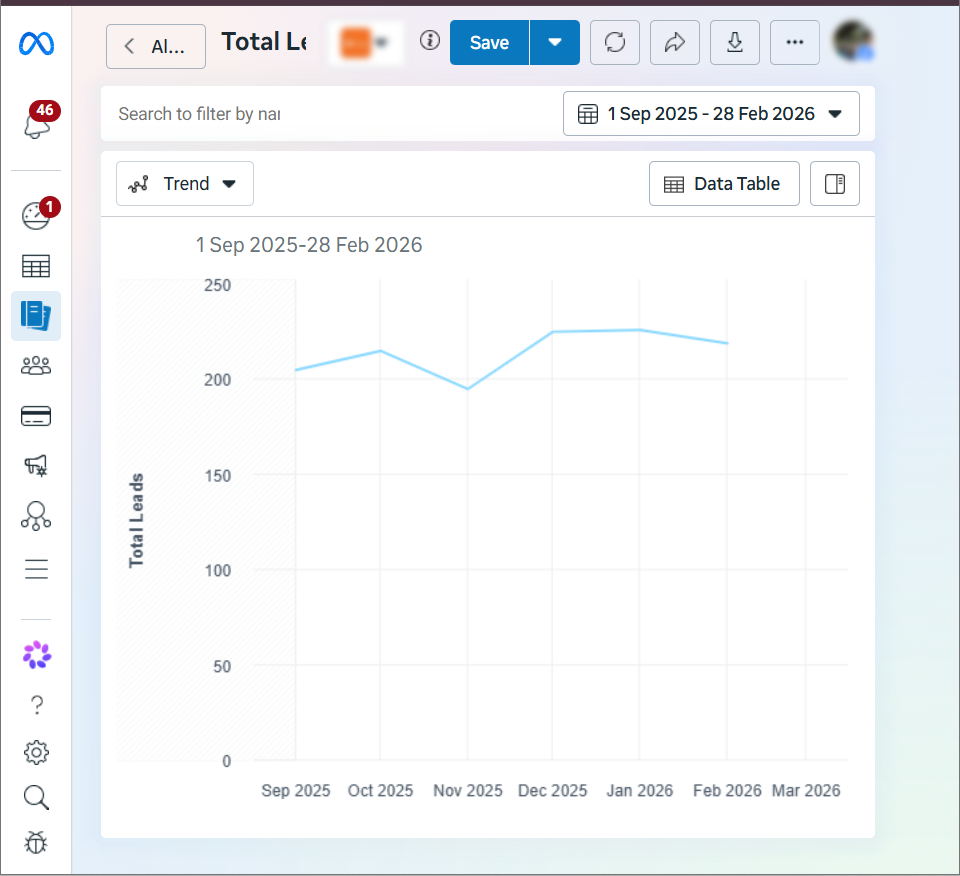
This did not happen because the platform changed.
It happened because the business matched how Meta works.
Filter 2: Do Your Numbers Support It
Even if your business fits Meta ads from a customer behavior standpoint, your numbers still need to work.
This is where most businesses make incorrect assumptions.
Example Scenario
Let’s walk through a simple case:
- Ad spend: $3,000
- Cost per lead: $30
- Leads generated: 100
Close rate:
- 25 percent
- 25 customers
Profit per customer:
- $80
Total Profit
25 × $80 = $2,000
Total Cost
$3,500 including ads and management
Final Result
You spent $3,500
You made $2,000
You lost $1,500
Why This Is Misleading
On the surface:
- leads are coming in
- cost per lead looks reasonable
But the business is losing money.
This is why leads alone are not a useful metric.
A Better Metric: Return Multiple
Instead of focusing only on CPL, use this:
Return Multiple = Gross Profit ÷ Marketing Cost
In this example:
$2,000 ÷ $3,500 = 0.57x
This means for every $1 spent, you get back $0.57.
What You Should Aim For
- 2x is acceptable
- 3x or higher is strong
Anything below 2x will feel unstable.
Case Example #2
With another client:
Initially:
- leads were coming in
- CPL looked fine
But:
- lead quality was poor
- close rate was low
After restructuring:
- messaging angles were aligned with real customer concerns
- creatives were diversified and tested properly
Result:
- better lead quality
- improved conversion rate
- stronger overall economics
Why Most Businesses Still Struggle
Even after understanding these two filters, most businesses get stuck at execution.
They rely on:
- random creative ideas
- isolated tests
- inconsistent messaging
This leads to:
- unstable performance
- poor learning cycles
The Missing Piece: A System
To make Meta ads work consistently, you need a structured way to:
- identify what messaging should work
- create multiple variations from it
- test and refine systematically
This is where most businesses fall short.
How We Approach This
We use a system called the Message Multiplication Engine (MME).
Instead of relying on a few creatives, we:
- define the core message
- multiply it into multiple concepts, formats, and hooks
- test them in a structured way
This removes guesswork and improves consistency.
What Should You Do Next
At this point, you should have clarity on two things:
- whether your business fits Meta ads
- whether your numbers support it
Now you have two options.
Option 1: Validate Your Numbers
If you want to check your unit economics:
Use the profitability calculator to model your scenario.
Option 2: Get a Structured Plan
If you want clarity on:
- what messaging to use
- what ads to create
- what to test next
Get a 30-day Meta ads creative plan.
We will review your business and map out what is likely to work.
Key Takeaways
- Meta ads are conditional, not random
- Customer decision behavior determines platform fit
- Unit economics determines profitability
- Leads alone do not indicate success
- A structured system improves consistency
Final Thought
Most businesses start with execution.
That is the mistake.
You should start with:
- how your customer decides
- whether your numbers make sense
Once those are clear, Meta ads become far more predictable.